Unleashing Customer & Data Insights: The 3 Principles to follow and how to put them into practice with AI.
Dreams are powerful. They are repositories of our desire. They animate the entertainment industry and drive consumption.
But what is speculative design and what’s the value it brings to businesses?
My nieces will spend the night, so I need to buy cereal. I explore via an AR visualization the product’s nutritional information and ingredients, while I search by brand to check if I can also purchase cereal bars from the same brand.
When I finally reach the checkout area, my smartwatch vibrates, reminding me that I have forgotten the sparkling water, as my parents texted me a few hours ago while I was at work; I had completely forgotten about that, that was close! I tap on my smartwatch’s screen and an employee brings the product I selected, a few moments later, right on time for the checkout. No need to waste time searching among the aisles, right?
But what is speculative design and what’s the value it brings to businesses?
Last-minute grocery shopping seems to be my thing, so I find myself driving to the local hypermarket, on my way back from work, just a few hours before our family festive dinner. I enter the private parking lot and park my car, as I notice a camera logging my car’s exact spot. My smartwatch advises me to get a shopping cart because “it seems you are going to need it today”. I grab one of the carts - who am I to question the insights from my past in-store behaviours - and pair it with my mobile (yes, if you are new here, the cart acts like a smart device).]
My smartwatch suggests heading to the 1st floor, based on the data retrieved from my Christmas Eve visit last year, when I literally almost flirted with a downgrade to the basic tier of my membership. In case you are wondering – I am too - it seems that I did spend around 15 minutes to select the perfect Christmas napkin and 20 more minutes to choose 7 “Mr. Men Little Miss” books for my nieces, something that inevitably resulted in an unfortunate event: the milk I had collected in my cart from the ground floor, reached room temperature.
We tap and pinch and double tap our way through life.
My nieces will spend the night, so I need to buy cereal. I explore via an AR visualization the product’s nutritional information and ingredients, while I search by brand to check if I can also purchase cereal bars from the same brand.
When I finally reach the checkout area, my smartwatch vibrates, reminding me that I have forgotten the sparkling water, as my parents texted me a few hours ago while I was at work; I had completely forgotten about that, that was close! I tap on my smartwatch’s screen and an employee brings the product I selected, a few moments later, right on time for the checkout. No need to waste time searching among the aisles, right?
During checkout, I just have to scan my cart and pay – for the virtually added products as well. I head back to my car and an employee is waiting for me with the cheese board bundle box I chose earlier. He helps me to load the car and leaves. I add a tip for him using my app with a single tap using the wallet, redeeming my earned points.
The above storyline can be considered as a future-thinking narrative portraying a possible future state of the experience a consumer will have when visiting a supermarket 10 years from today. It was formulated as part of a time-limited speculative design activity, that focused more on a preferable future (I will provide shortly more context on what “preferable” means in this case).
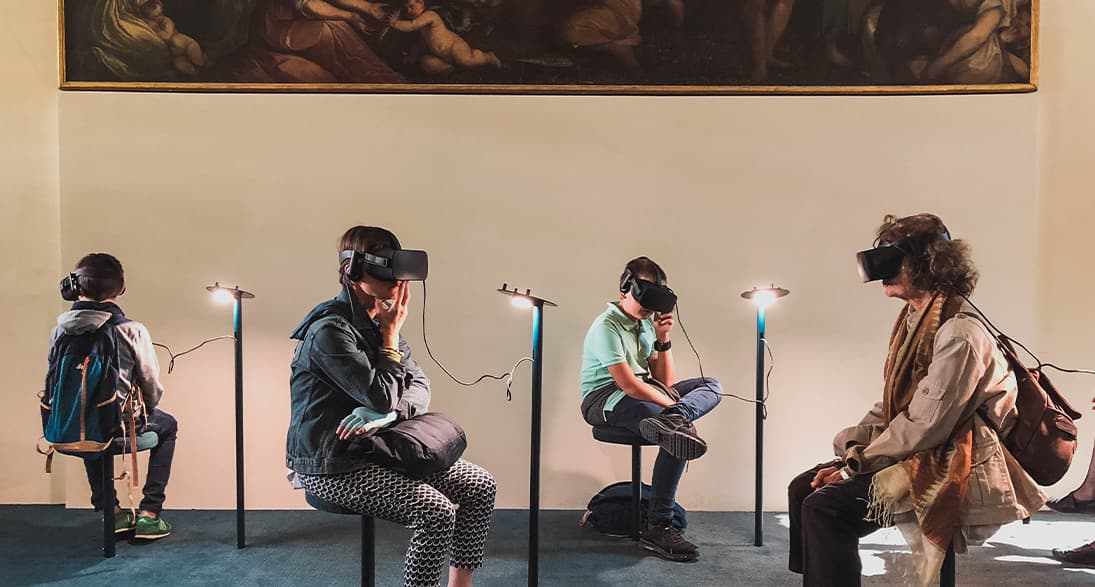
We are becoming more receptive towards immersive experiences.
We have moved from the phygital world - this has become the default at this point - into a world that uses all of our senses to inform us, entertain or delight us, save us time and effort. But are immersive experiences what we need at all times and how far these experiences can go without invading our personal space?
- We have moved from the phygital world
- entertain or delight us, save us time and effort
- But are immersive experiences
- We have moved from the phygital world
- entertain or delight us, save us time and effort
- But are immersive experiences

next opinions
21/02/25

21/02/25

21/02/25